Answer: The most popular casino games include slots, blackjack, roulette, poker, and baccarat. Each game has its unique appeal, from the simplicity of slots to the strategy of poker.
2. How Do I Learn to Play Casino Games?
Answer: Many casinos offer free lessons on popular games. There are also numerous online resources, tutorials, and apps where you can learn and practice without risking real money.
3. What Are the Odds of Winning?
Answer: The odds vary by game. Games like blackjack and poker, which require skill, can offer better odds than games purely based on chance like slots or roulette. However, every game in a casino is designed to favor the house.
4. Are Online Casino Games Fair?
Answer: Reputable online casinos use Random Number Generators (RNGs) to ensure fair play. It’s important to play at licensed and regulated online casinos to ensure game fairness.
5. Can I Play Casino Games on My Phone?
Answer: Yes, many online casinos offer mobile apps or mobile-optimized websites where you can play a variety of casino games on your smartphone.
Additionally, for information on how to pay taxes on casino poker winnings, see here.
Technological advancements have seemingly made it possible to carry out real-world activities on the internet , including gambling. Millions of players turn to online casinos and poker rooms to get their action. However, with the rapid growth of online gambling, some people wonder whether this is even legal. This article will provide you with a brief answer to this question.
Is It Legal To Play Online Poker
No one can deny that online casinos have revolutionized the world of gambling. In fact, they’ve made it easier than ever to gamble from your home or while traveling. However, some people are still wondering if it’s legal to play online poker. Here’s what you need to know:
• The short answer is yes—it’s totally legal to play online casino poker! Online poker rooms are regulated by the government, which means they’re safe and fair for players. They also offer a wide range of games with different stakes and levels of skill required.
You Can Register And Play Safely
The main thing to remember when playing online casino poker games is that they are legal. They are also safe and secure. You will not be breaking any laws by playing these games, and there’s no need to worry about being arrested for doing so.
In fact, there are many benefits to playing online poker games. Not only do you get to play against real people from around the world, but you can also enjoy some of the best bonuses available anywhere! With all this in mind, it’s easy to see why so many people choose to play online poker games instead of going out into their local casinos or finding other ways to gamble.
What To Look Out For When Choosing An Online Casino Or Poker Room
When it comes to online casinos, there are a lot of options. You can play poker in a number of different ways: on your phone, on your computer, or at home with friends. But what makes an online casino good?
When choosing an online casino, you should look for one that has a variety of games and offers a fair chance of winning. A good site will have customer support available 24/7 so that you can get help if you need it. You should also check out the payout time and see whether or not they offer promotions like no deposit bonuses or free spins.
Whether you’re a beginner or a seasoned player, understanding slot machines is essential for success. Slot machines, often referred to as fruit machines or one-armed bandits, are the most popular type of casino game in the world.
How Do They Work?
The basic premise of a slot machine is simple. A player spins the reels, and if the symbols align, they win a payout. The chances of winning are determined by the Random Number Generator (RNG), ensuring that every spin is fair.
When you spin the reels, the RNG generates a random number for each reel. The numbers correspond to the symbols on the reels, determining whether you win or lose.
Types of Slot Machines
There are several types of slot machines available, including:
Classic slots
Video slots
Progressive jackpot slots
Classic slots are characterized by their simplicity, typically featuring three reels and a single payline. Video slots, on the other hand, offer more complex gameplay, with five or more reels and multiple paylines. Progressive jackpot slots offer huge payouts, with jackpots that can reach millions.
Tips for Winning at Slot Machines
While there’s no sure-fire way to win at slot machines, following these tips can improve your chances:
Choose a machine with a high payout percentage
Set a budget and stick to it
Play max bet to increase your chances of winning
Take advantage of bonuses and promotions
Remember, playing slot machines should be fun, and you should never gamble more than you can afford to lose.
For more information on online slot machines, including reviews and tips, visit https://yoakimbridge.com.
If you’re looking for an exciting and challenging card game, Texas Hold’em is just what you need. This classic poker variant requires strategy, skill and a bit of luck to master. In this guide, we’ll cover the rules, strategies and top sites to play Texas Hold’em online. So, let’s get started!
The Basics of Texas Hold’em
Before we dive into the specifics of the game, let’s review the basics of Texas Hold’em. Each player is dealt two cards face down, followed by a round of betting. Then, three community cards are dealt face up on the table. These cards are shared by all players to make their best possible hand. Another round of betting follows, and then a fourth community card is dealt face up. This process repeats one more time with the fifth and final community card. The player with the best five-card hand at the end of the game wins.
Strategies for Winning Texas Hold’em
Here are some strategies that can help you win at Texas Hold’em:
Know the value of your hand and when to fold
Observe your opponents and their betting patterns
Take advantage of position
Manage your bankroll wisely
Top Texas Hold’em Sites
If you want to play Texas Hold’em online, here are some of the top sites to check out:
홀덤사이트 – This site offers a wide range of games, including Texas Hold’em, and has a user-friendly interface.
PokerStars – This site is known for its large player pool and variety of game options.
888 Poker – With a reputation for excellent customer support and generous bonuses, 888 Poker is another top choice for Texas Hold’em players.
Conclusion
Texas Hold’em is one of the most popular card games in the world, and for good reason. With its blend of skill, strategy and luck, the game offers endless possibilities for fun and excitement. Whether you’re a seasoned pro or a beginner, there’s never been a better time to get in on the action. So, what are you waiting for? Head to one of the top Texas Hold’em sites and start playing today!
Pocket pairs are a great starting hand in Hold’Em, but only if you play them right. It consists of two cards having the same suit. When you have a pocket pair, you have the advantage of knowing your opponent’s hand before they act. If your opponent has a higher pair than you, for example, and acts first, then you can fold without losing any money. But if they have a lower pair than yours and act first, then you should probably call them.
Different Types of Pocket Pairs
Pocket pairs are common in Hold’Em and can be a great starting hand. They are typically easy to play, so they’re a good option for beginners or casual players. But, it’s important to remember that there are other starting hands that are more likely to win. There are two types of pocket pairs: one with two cards that are the same value, like 8-8 or 10-10; and one with two different values: 9-7 or 10-3.
The best starting hand in Hold’Em is AA because it has the highest value and will beat all of the other starting hands 100% of the time.
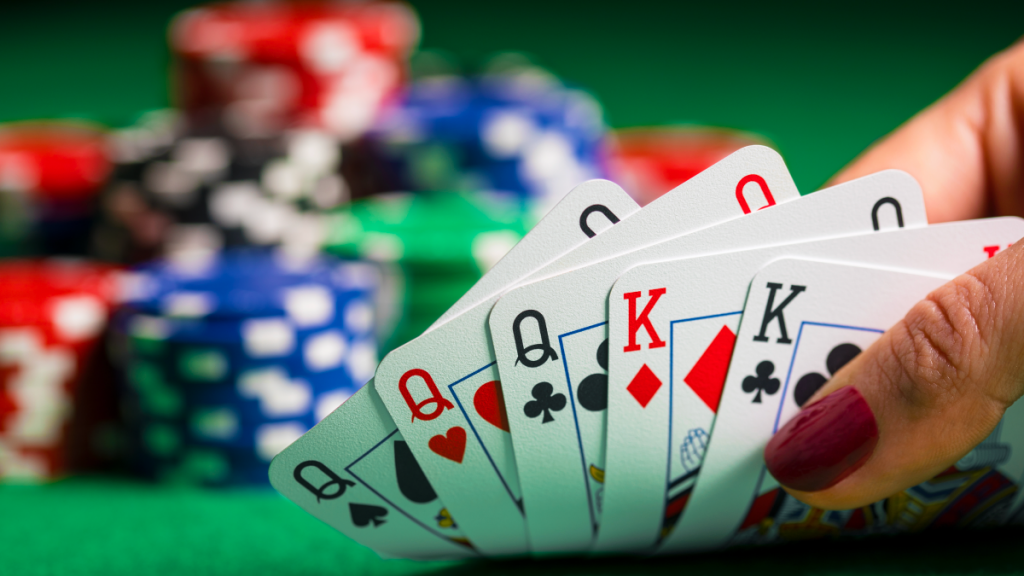
Next on the list is KK, which also has a high value and will beat out any other starting hands 100% of the time except AA. This is sometimes referred to as “top two pair,” because you have two pairs at once (K and Q).
Third is QQ which is also known as quads can beat all of the other starting hands except AAs and KKs.
The reason why pocket pair can be so powerful is because it’s hard for other players to know what cards you have if all they can see is your face and not your hand. If you have a pair of fives, but someone else has a pair of threes, it’s pretty easy for them to figure out which card you have (the five). But if they can’t see any cards at all? It’s going to be pretty hard for them to figure out whether or not they should fold.
The strength of your hand depends on your opponent’s cards. If your opponent has an ace or king, you will be outdrawn in most cases. On the other hand, if you’re playing with a pair of aces or kings, you can be sure that your hand will have good value in any situation.
Online poker games have been a popular form of casino entertainment for years. However, there has always been a debate about whether online poker games are honest or not. While some people believe that online poker games are completely fair, others believe that they are rigged to benefit certain players. In this article, you will learn the factors that affect the fairness of online casino centiment.io poker games.
Online Poker Games Use Random Number Generators
Firstly, it is important to understand that online poker games use random number generators (RNGs) to deal cards. These RNGs are designed to ensure that the cards dealt are completely random and not influenced by any external factors. As a result, online poker games are often considered to be more fair than live poker games because there is no human element involved in the dealing process.
However, some players believe that online poker games are rigged because they have experienced bad beats or have seen other players win too often. While it is true that bad beats can happen in online poker games just as they can in live games, it is important to remember that these occurrences are part of the game and do not necessarily indicate that the poker game is rigged.
Integrity Of The Casino Site Hosting The Poker Game
Another factor that affects the fairness of online poker games is the integrity of the site hosting the game. If a site has a reputation for being dishonest or has been caught cheating in the past, likely, the games on that site are not fair. It is important to do research and choose a reputable site to play on to ensure that the games are fair and that your money is safe.
One way that online poker sites ensure the fairness of their poker games is through third-party audits. These audits are conducted by independent companies that specialize in testing online gambling sites. The audits test the RNGs used by the site and ensure that they are truly random and not influenced by any external factors. If a site passes these audits, it is a good indication that the poker games are fair and that the site can be trusted.
Always Choose A Reputable Casino Site To Play Poker
In conclusion, online poker games can be considered honest if they use RNGs that are truly random and are audited by independent third-party gambling companies. However, it is important to choose a reputable casino site to play on to ensure that the poker games are fair and that your money is safe.
While bad beats and losing streaks can be frustrating, they are part of the game and do not necessarily indicate that the game is rigged. Ultimately, the fairness of online casino poker games depends on the integrity of the casino website hosting the poker games and the measures they take to protect the integrity of their poker games.
Many poker players find that the game is easy to learn and fun to play. Poker can be played with a wide range of different betting structures and rules, but there are a few things that make Texas Hold’Em different from other versions of poker.
Here are some tips on how you might want to bet differently when playing in a Texas Hold’Em game:
It Is One Of The Most Popular Poker Games To Play.
The game is played with a standard 52-card deck, with each player receiving two cards face down and one card face up. After all, players have placed their bets, three community cards are dealt in turn to each player at once (the flop).
This continues for the next two rounds (the turn and river) until all five community cards have been dealt–at which point players may use any combination of their cards and those on display to make their best hand.
Many Poker Players Find That The Game Is Easy To Learn And Fun To Play.
Many poker players find that the game is easy to learn and fun to play. It’s also a game of skill, not luck–so you can be sure you’ll always have a chance at winning.
Ultimate Texas Hold’Em can be played by people of all ages and experience levels!
It Can Be Played With A Wide Range Of Different Betting Structures And Rules
Ultimate Texas Hold’Em is played with a 52-card deck. Each player gets two hole cards and five community cards, which are shared by all players. The dealer burns a card and deals three cards face up in the center of the table (the flop), followed by two more individual cards (one at a time) on top of them (turn and river). The player with the best five-card poker hand wins at the showdown!
Betting Strategy
The most important thing to remember when betting is not to bet too much or too little. The best way for you to figure out the right amount of money to put in the pot is by keeping track of your hand and trying different amounts until it feels right.
The second most important thing is not getting distracted by other players’ bets and figuring out whether or not they have a good hand based on their behavior, but this isn’t as easy as it sounds! But if someone keeps raising without looking at his cards first? Well then maybe he has something good going on there.
Conclusion
Hope that after reading this article, you have a better understanding of what makes Texas Hold’Em different from other poker games. If you’re interested in learning more about poker, check out some other articles on the subject!
Your favorite casino games can be played in online casinos. They have lots of different games and you can choose from a wide range of different casinos. But what if you want to play an online casino in Korea? Is that even possible?
The short answer is yes, but there are some things that you need to know first. Here is everything that you need to know about playing online casinos in Korea!
Online Casinos In South Korea
Online casinos are legal in South Korea. This means that you can play at an online casino without breaking any laws or risking arrest, as long as you follow the rules set forth by the Korean Casino Regulatory Commission.
The Commission regulates all aspects of online gambling, including the maximum bet amount ($10,000).
If you do choose to gamble at an online casino, there are a few things worth knowing before doing so:
• You must be 18 years old or older to gamble on any type of gambling site (including those located outside Korea).
• If someone under 18 attempts to access such sites, they may be blocked by their ISP or blocked entirely by law enforcement agencies if deemed necessary by authorities after an investigation has taken place.
• In addition to being at least 18 years old when registering with a particular gaming establishment’s platform/network provider(s), players must also provide accurate personal details including name(s), date-of-birth etcetera during the registration process.
There are strict rules for online casino players, operators, and affiliates.
• Players must be over 21. • Players must be physically located in South Korea. • Residents of South Korea can only play at licensed casinos (no exceptions).
Things You Should Consider Before Signing Up Or Engaging With An Online Casino Site
As mentioned earlier in this article, Korean online casinos must comply with the regulations of the country where they are based. This means that Korean players have some legal options when it comes to gambling online. The most important thing to remember is that you should always check if an online casino is licensed and regulated by a reputable regulatory body before signing up or engaging in any activity on their website or app.
It’s also worth noting that while many people enjoy playing games like blackjack and roulette at home, there are some situations where it might not be possible due to certain laws or regulations within your country.
Conclusion
Online gambling is a complex topic that can be confusing to navigate. It’s important to understand how law enforcement will handle these issues and if they are being enforced in your country. With this information, you can make an informed decision about whether or not Korean online casinos site is right for you!
When you play online poker, it’s a completely different game than playing live at the casino. It’s much more difficult to tell who’s winning and who’s losing in an online poker game than it is in real life, which makes bluffing much harder. Let me explain.
Is It More Difficult To Bluff In An Online Poker Game?
The answer is yes it is harder to bluff in an online poker game. This is because you don’t have the same ability to see your opponent’s face as you would in a live game, so it can be hard to tell if someone is bluffing or not.
You also don’t get any information about how good of a player someone might be based on how they act during the hand; for example, if they call all-in with only one card left in the deck without even looking at their cards first then you know they’re probably making a bad bet and probably shouldn’t put money into that pot.
You Can’t Tell If Someone Has A Good Hand, Or A Bad Hand, By Looking At Them
As you can see, there are several things that online poker players cannot tell about the people they’re playing against. In a live game, these are all things that we would be able to determine by looking at our opponents and reading their body language.
But in an online game, it’s much more difficult to tell if someone has a good hand or not–or even if they bluff! The only way to figure out what kind of player you’re up against is by watching how they play (and remembering what cards were dealt).
Conclusion
There you have it. Bluffing in an online poker game is harder than in a live one. You can’t tell if someone has a good hand or a bad hand by looking at them and there are no tells to give away what kind of cards they might be holding. This means that you have to be very careful about how you play against unknown players, but it also makes bluffing more rewarding when done right!
Video poker is a popular casino game that’s played online and in casinos across the world. The game has become so popular that it can be found in land-based casinos, as well as online. If you’re looking to play video poker at an online casino, there are some things you’ll need to know before making your first deposit.
You Can Play Video Poker At Many Different Online Casinos
Video poker is a great way to make extra money. It’s easy to play, you don’t need any special skills or big bankrolls to be successful and there are many different variations of the game, so even if you only want to play one hand at a time it won’t be long before you’re winning big.
Online casinos have taken the classic game of poker and made it interactive, competitive and fun. You can even see other players’ hands as you make your decisions. Video poker is a popular game in casinos and online gaming sites. In fact, the most played card game for money at online casinos is video poker.
There are multiple types of video poker games at these sites which are based on traditional poker strategies. For example, the Jacks or Better and Deuces Wild games are variations on the original Jacks or Better game. These games focus on getting a high hand, whereas Double Double Bonus Poker is based on all paying hands and requires no specific strategy to win.
The majority of online casinos provide its customers with a selection of various alternatives to choose from when they are participating in gaming sessions. Reading reviews written by others who have played a certain kind of video poker before you is the most effective approach to determine which type of game will best satisfy your requirements.
There are many benefits to playing video poker at online casinos. You’ll enjoy greater flexibility in your gaming schedule because most sites offer 24/7 support and customer service via email or phone. You’ll also have access to more information than ever before on how to get the most out of your experience as a player and what makes each game unique.
The best part about playing video poker on an online casino is that there are no limits to how much you can win! There are so many different variations of this game available to play, each with its own set of rewards and features that gives you an edge over other players who don’t know what lies ahead for them!